
Βάτος (Rubus fruticosus agg.)
Βάτος
Οι περισσότεροι τον γνωρίζουν θεωρητικά από τους μύθους των θρησκευτικών γραφών και τον Μωυσή. Οι έχοντες προσωπικά βιώματα, τον γνωρίζουν από κλειστά μονοπάτια, τρύπια μπλουζάκια και δυσάρεστες στενές επαφές, αφού μιλάμε για ένα ζωντανό αγκαθωτό συρματόπλεγμα.
Οι όχι και τόσο κοντινοί στη φύση, αποκαλούν βάτα όλους τους πυκνούς θάμνους που εμποδίζουν το δρόμο τους, όπως πουρνάρια, σχίνα και αγριοτριανταφυλλιές.
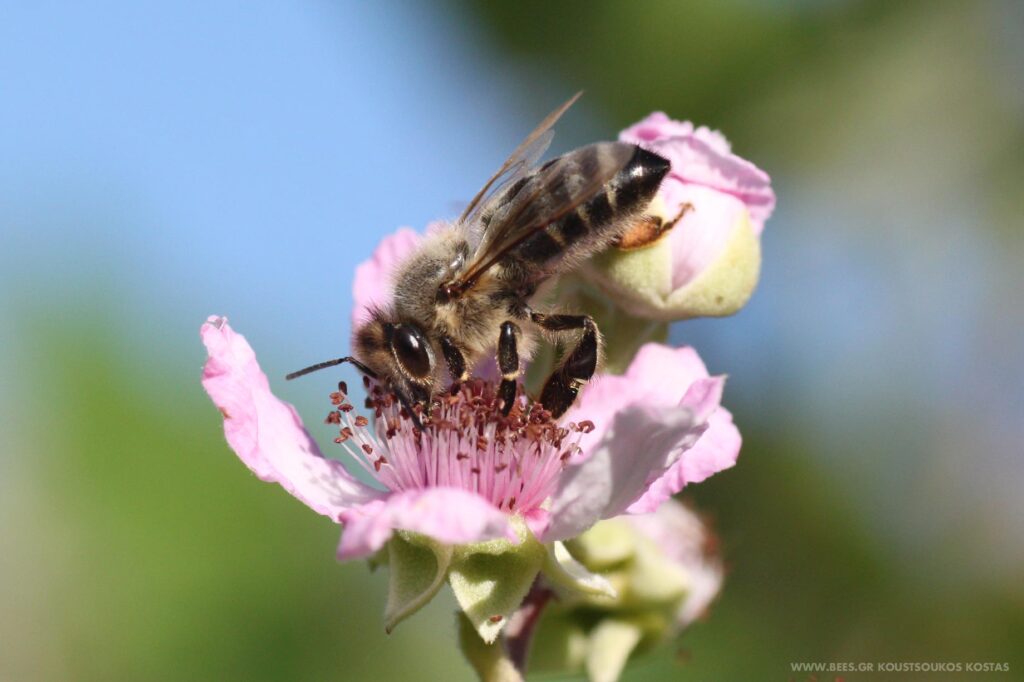
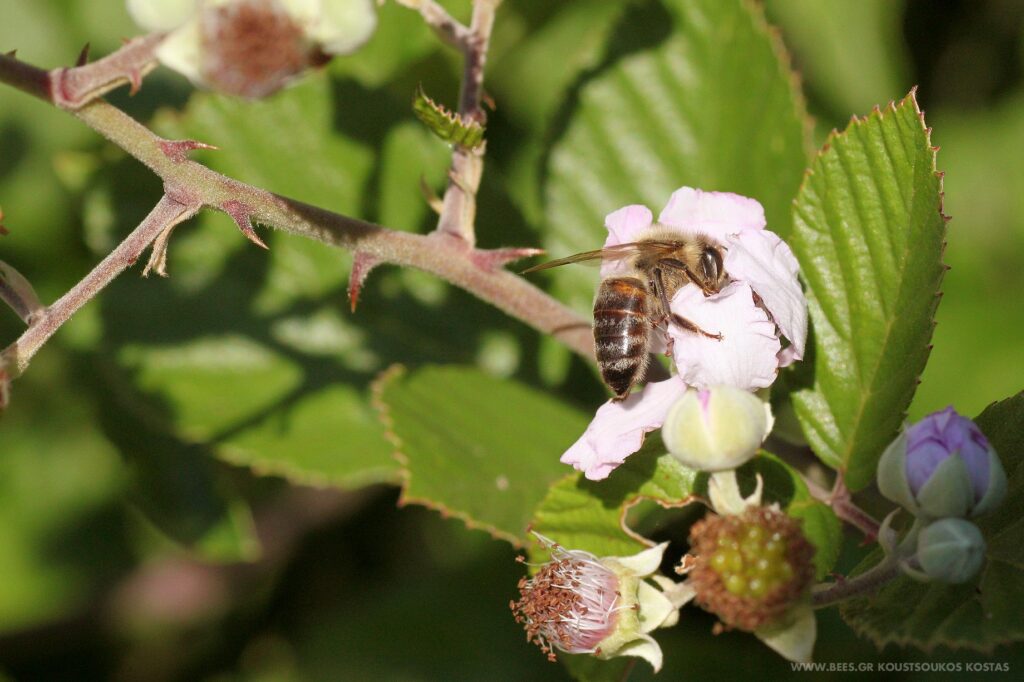
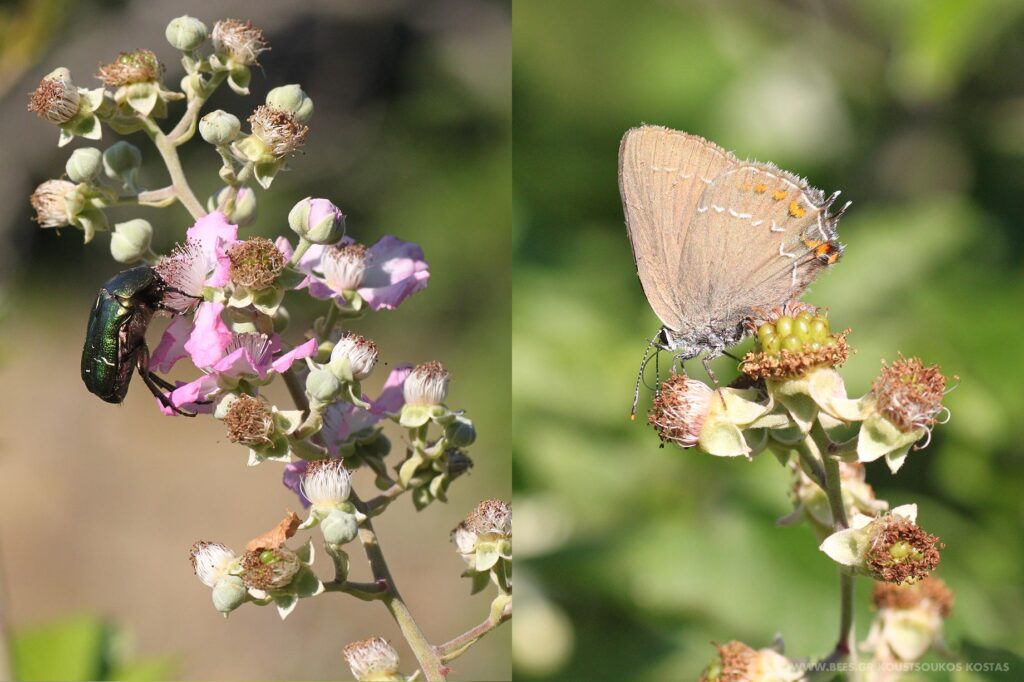
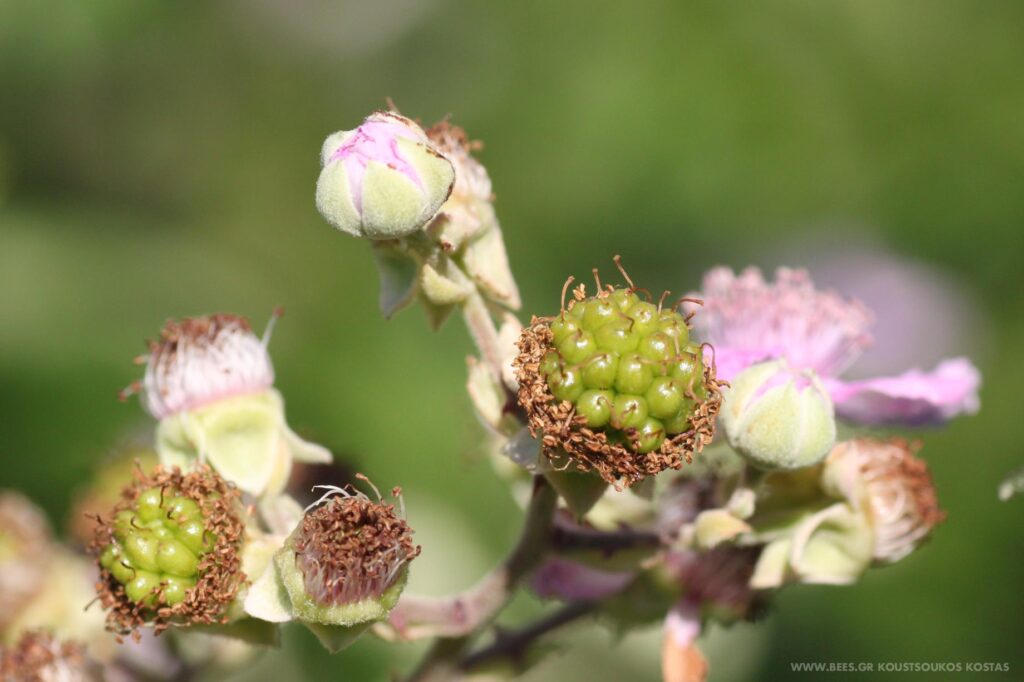
Από την άλλη, οι μελισσοκόμοι τον αγαπάνε, αφού Ανθίζει παρατεταμένα (σε ένα βλαστό μπορούν να συνυπάρχουν, μπουμπούκια, ανοιχτά άνθη, άγουροι και ώριμοι καρποί)
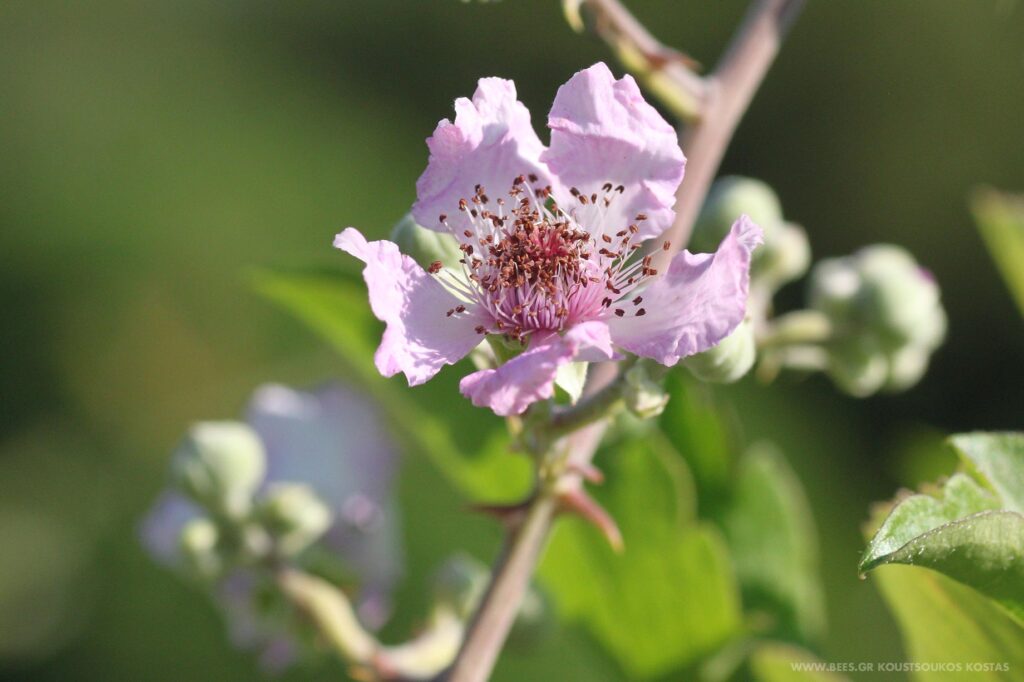
Ανάλογα με το υψόμετρο, η ανθοφορία θα λάβει χώρα από Απρίλιο μέχρι Ιούλιο, ενώ σε ορεινές περιοχές, όπως το Κροκύλειο Φωκίδας που τον φωτογράφισα εγώ, η ανθοφορία μπορεί να φτάσει και μέχρι τον Αύγουστο.
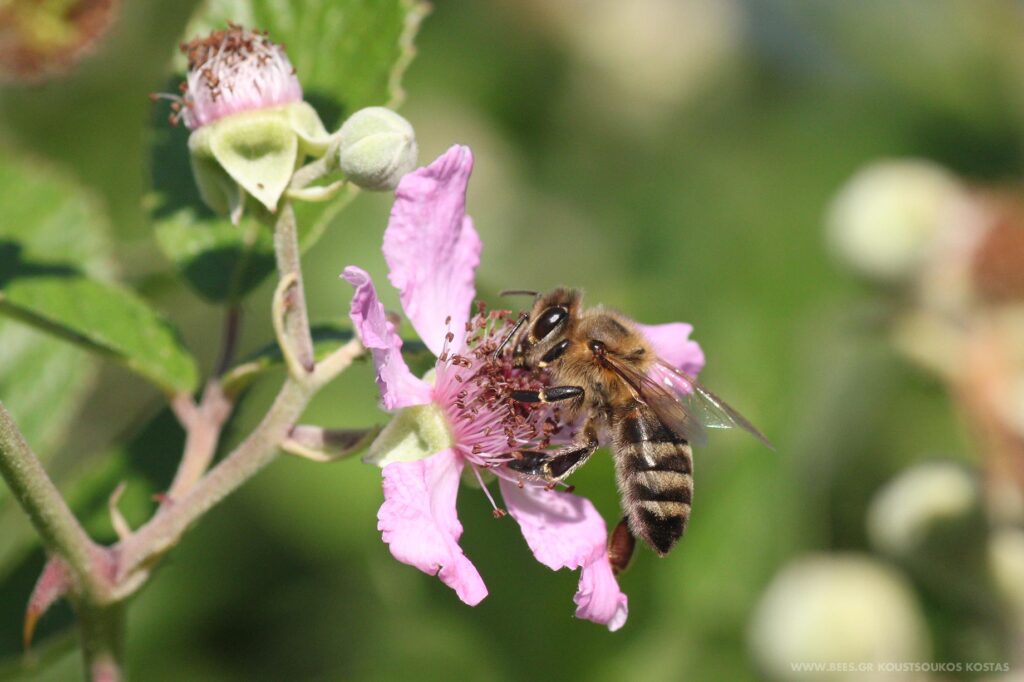
Πολύ καλό μελισσοκομικό φυτό, δίνει μεγάλες ποσότητες από νέκταρ και γύρη, στην Ελλάδα όμως η παράλληλη ανθοφορία με άλλα φυτά, καθιστά πολύ δύσκολη έως αδύνατη τη συλλογή μελιού αποκλειστικά από βάτο. Στο εξωτερικό όμως, σε αρκετές χώρες, υπάρχει blackberry blossom honey
Η γύρη του Rubus fruticosus περιγράφεται στη μελισσοκομική βιβλιογραφία ως ωχροκίτρινη, κιτρινοκρέμ και μερικές φορές κιτρινοπράσινη ανάλογα με το υποείδος και τις συνθήκες.
Και πάμε τώρα στα υποείδη:
Οι βάτοι αποτελούν έναν μικρό «πονοκέφαλο» για τους επιστήμονες που ασχολούνται με την αναγνώριση, την περιγραφή και την ταξινόμηση των φυτών. Πολλά ευρωπαϊκά είδη μπορούν να αναπαράγονται χωρίς κανονική γονιμοποίηση, ενώ υβριδίζονται εύκολα μεταξύ τους. Έτσι δημιουργούνται αμέτρητες τοπικές μορφές με μικρές διαφορές, γι’ αυτό και οι επιστήμονες συχνά αναφέρονται στον κοινό βάτο ως Rubus fruticosus agg. («σύμπλεγμα ειδών») αντί για ένα μόνο, σαφώς ορισμένο είδος. Η διαδικασία λέγεται απομειξία (apomixis)
Σήμερα αναγνωρίζονται περισσότερα από 700 είδη Rubus παγκοσμίως, ενώ ορισμένες ταξινομικές σχολές, επειδή αντιμετωπίζουν πολλές από αυτές τις τοπικές μορφές ως ξεχωριστά “μικροείδη” (microspecies), ανεβάζουν τον αριθμό σε πάνω από 1.000 ή ακόμη και 1.500 είδη.
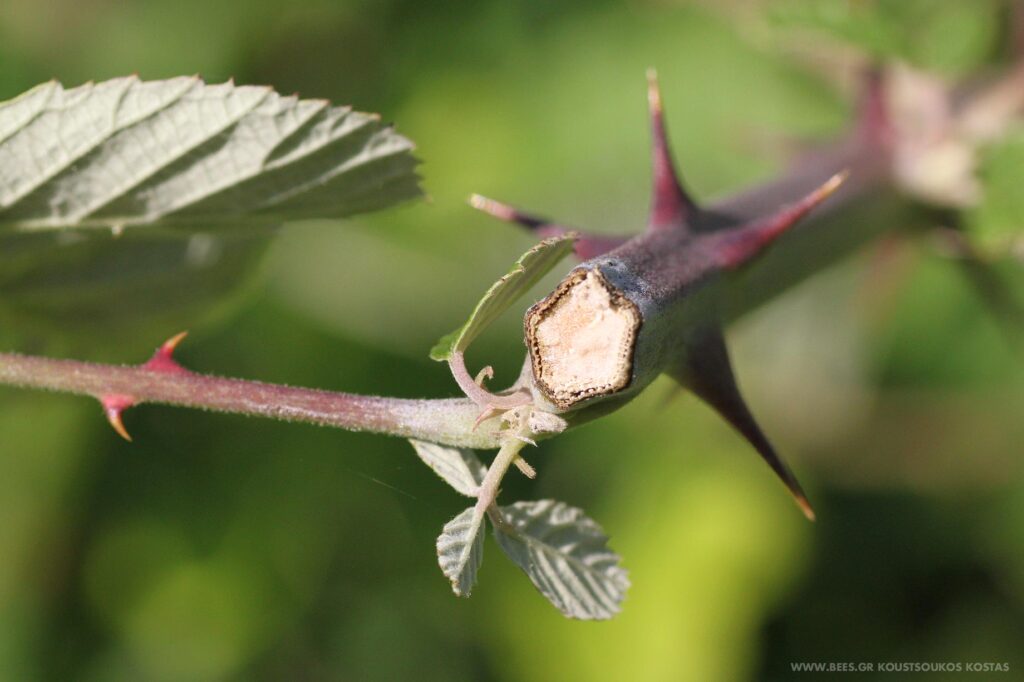
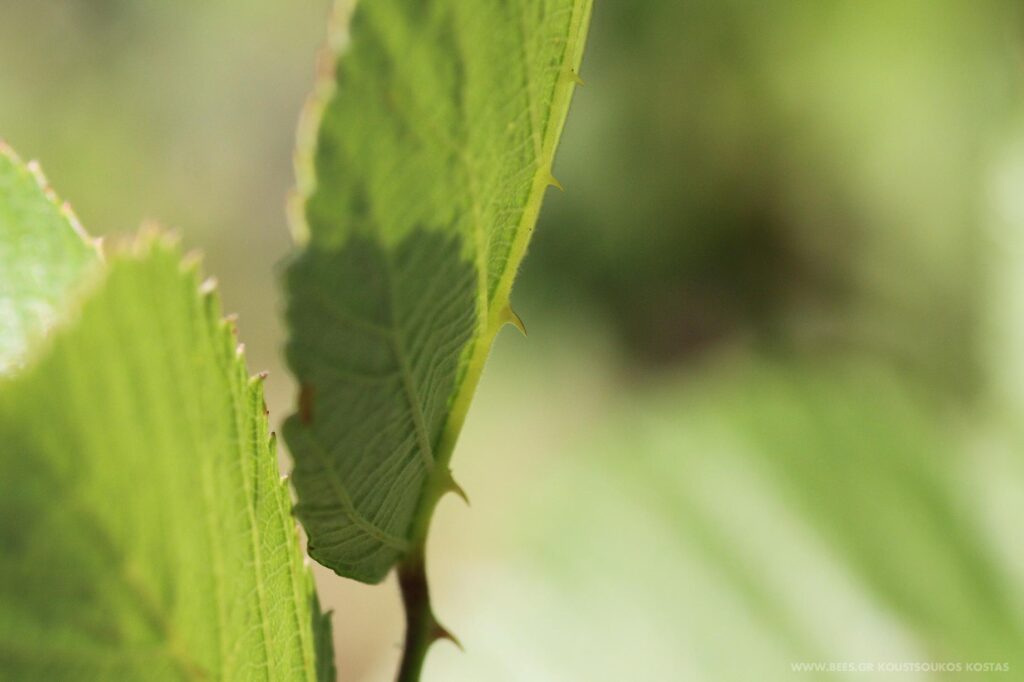
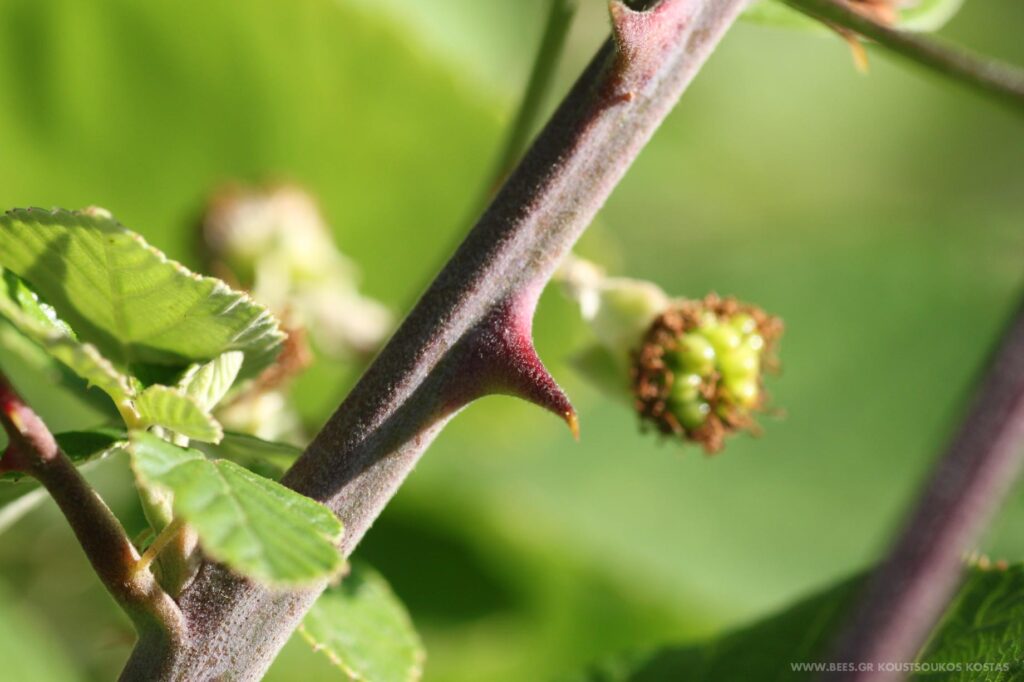
Ένα άλλο ενδιαφέρον σημείο είναι οι αντίθετοι ρόλοι που έχει ή φαίνεται να έχει το φυτό στα οικοσυστήματα. Ενώ για τους ιδιοκτήτες χωραφιών και καλλιεργειών θεωρείται ζιζάνιο και δύσκολο στη διαχείριση φυτό καθώς είναι σκληρό και γεμάτο αγκάθια, (έχει αγκάθια ακόμα και κάτω από τα φύλλα), είναι ένα πολύτιμο φυτό για την ανασύνθεση καμένων οικοσυστημάτων. Αναπτύσσεται γρήγορα κι εύκολα σε μια καμένη γη και βοηθά στη διατήρηση των εδαφων που είναι ευάλωτα σε διαβρώσεις μετα απο φωτιές. Δημιουργεί καταφύγιο για πάρα πολλά είδη ζώων, αφού ενισχύει την άμυνά τους απέναντι σε μεγαλύτερα αρπακτικά.
Θεωρείται είδος-κλειδί
και αν αφαιρεθούν οι βάτοι από ένα τοπίο:
μειώνεται η τροφή των επικονιαστών,
χάνονται θέσεις φωλιάσματος για πολλά πουλιά,
μειώνεται η φυσική αναγέννηση των δασών,
περιορίζεται η τροφή δεκάδων ειδών άγριας πανίδας.
Με άλλα λόγια, πίσω από ένα φυτό που πολλοί προσπαθούμε να ξεριζώσουμε κρύβεται ένας από τους σημαντικότερους «μηχανικούς» των μεσογειακών οικοσυστημάτων.
In Englsih:
Most people know it in theory from religious scripture and the story of Moses and the Burning Bush. Those with first-hand experience know it from overgrown trails, torn T-shirts, and unpleasant close encounters, because we are talking about a living wall of thorns. People who are less familiar with nature often use the word “bramble” for any dense shrub that blocks their path, whether it is a kermes oak, mastic shrub, or wild rose.
Beekeepers, however, love it. Its flowering period is remarkably long, with a single cane often bearing flower buds, open blossoms, unripe fruit, and ripe blackberries all at the same time.
Depending on elevation, flowering usually takes place from April to July. In mountainous areas, such as Krokyleio, where I photographed it, blooming can continue even into August.
The bramble is an excellent honey plant, producing abundant nectar and pollen. In Greece, however, its flowering coincides with that of many other nectar-producing plants, making it very difficult—if not impossible—to produce a truly monofloral blackberry honey. In several other countries, however, blackberry blossom honey is a well-known varietal honey.
The pollen of Rubus fruticosus is described in beekeeping literature as pale yellow, creamy yellow, or sometimes yellowish-green, depending on the subspecies and environmental conditions.
The challenge of classifying brambles
Brambles present a fascinating challenge for botanists who study plant identification, description, and classification. Many European species can reproduce without normal fertilization, while they also hybridize readily with one another. As a result, countless local forms with only slight differences have evolved. This is why botanists often refer to the common bramble as Rubus fruticosus agg. (an “aggregate species” or “species complex”) rather than as a single, clearly defined species. This reproductive process is known as apomixis.
Today, more than 700 species of Rubus are recognized worldwide. However, some taxonomic schools treat many of these local forms as distinct microspecies, increasing the total number to well over 1,000—and in some classifications, even as many as 1,500 species.
A plant with two very different ecological roles
Another fascinating aspect of the bramble is the contrasting role it plays in ecosystems. To farmers and landowners, it is often considered a troublesome weed—difficult to manage because of its vigorous growth and formidable thorns, which even occur on the undersides of the leaves.
Yet ecologically, it is one of the most valuable plants for the recovery of landscapes after wildfire. It establishes quickly on burned ground, helping stabilize soils that are highly vulnerable to erosion. At the same time, dense bramble thickets provide essential shelter for countless animal species, protecting them from larger predators.
The bramble is considered a keystone species. If brambles were removed from a landscape:
- pollinators would lose an important food source,
- many bird species would lose nesting sites,
- the natural regeneration of forests would decline,
- and dozens of species of wildlife would lose an important source of food.
In other words, behind a plant that many of us are eager to uproot lies one of the most important “ecosystem engineers” of Mediterranean landscapes.
Leave a Comment